Dallas Buyers Club: A Study In Lighting
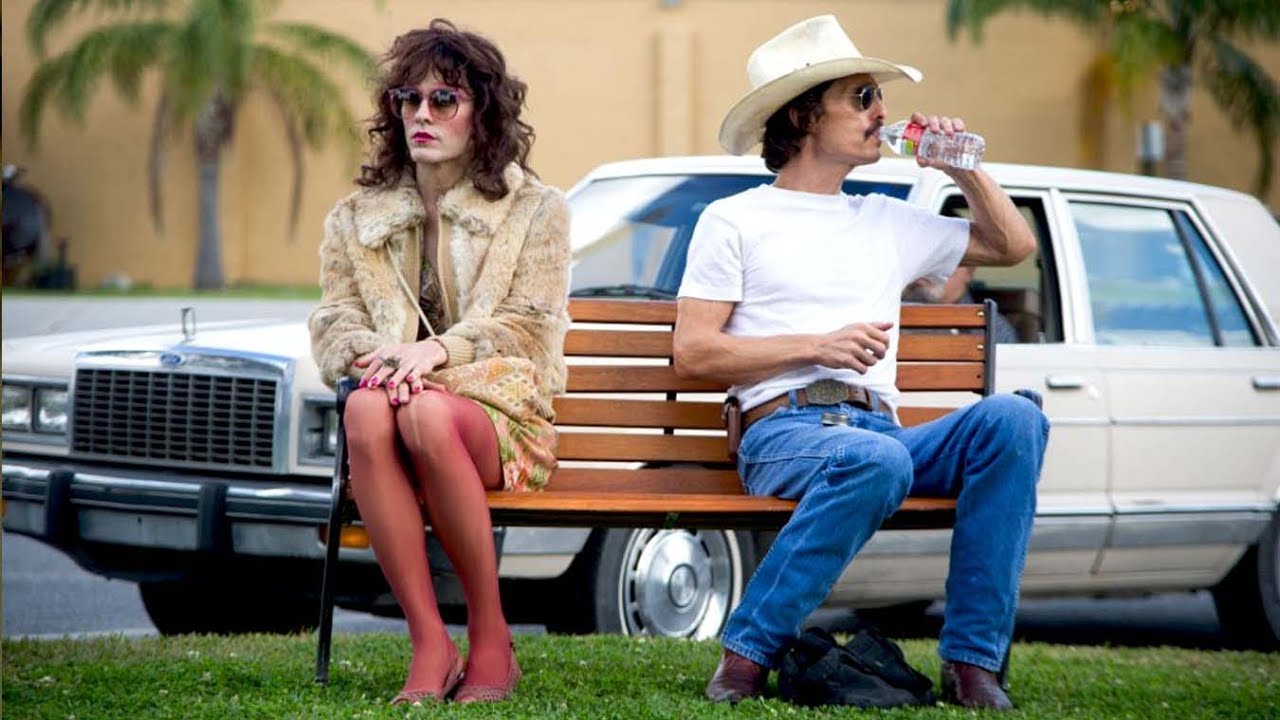
Movie: Dallas Buyers Club (Jean Marc Vallee, 2013)
Sequence: Rayon goes to meet her father (1:24:07 to 1:26:51)
The sequence deals with Rayon meeting her estranged father to ask him for some money to help Ron and the club. The lighting choices used in this sequence showcases a hitherto unseen side of Rayon, and highlight the stark contrast between Rayon and Raymond.
Shot 1
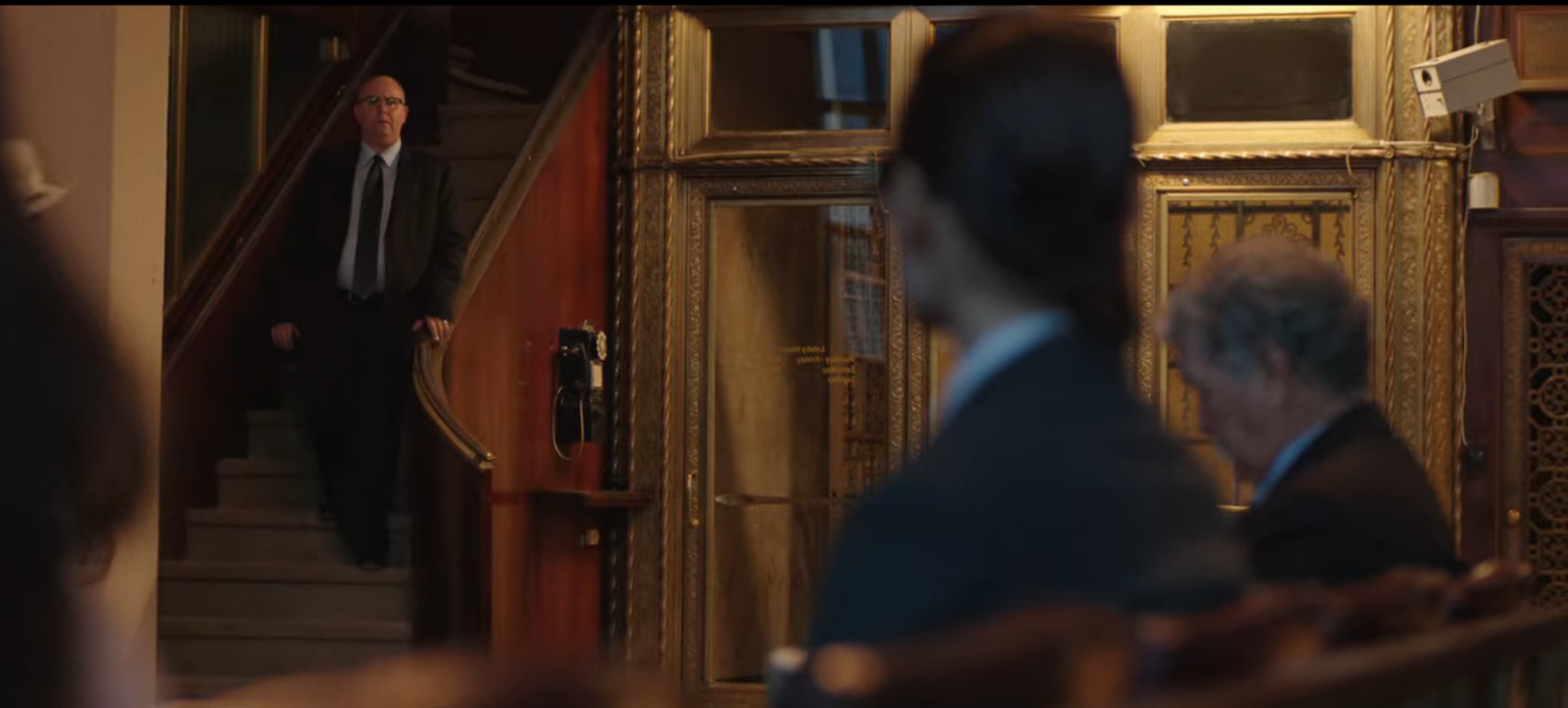
The scene starts with a full length shot of a suited man, who we later recognize as Rayon, standing with her back to us at a bank reception. The surroundings look opulent; the counter is made of marble while the doors are gilded and ornate. The next shot is an over-the-shoulder shot, with the camera focusing on the pudgy man climbing down the stairs in the background. His eyes are fixed on Rayon, who is out of focus in this shot, and he coldly beckons her upstairs. The lighting in this room is soft and golden. The primary source of light is coming from the top left corner of the room off-screen. The scene is lit in such a way so that the yellow light does not reach Rayon’s back, which is visible to us. This creates an obvious contrast in the color temperature within the same frame. The back of Rayon’s neck looks pale and bluish while compared to the rosy glow on the other man’s face. This visual choice highlights Rayon’s sickness but more importantly, his exclusion from his father’s world. Unlike most of the places Rayon stays in, this waiting room is silent except for the clip-clop of footsteps and the occasional cough.
Shot 2
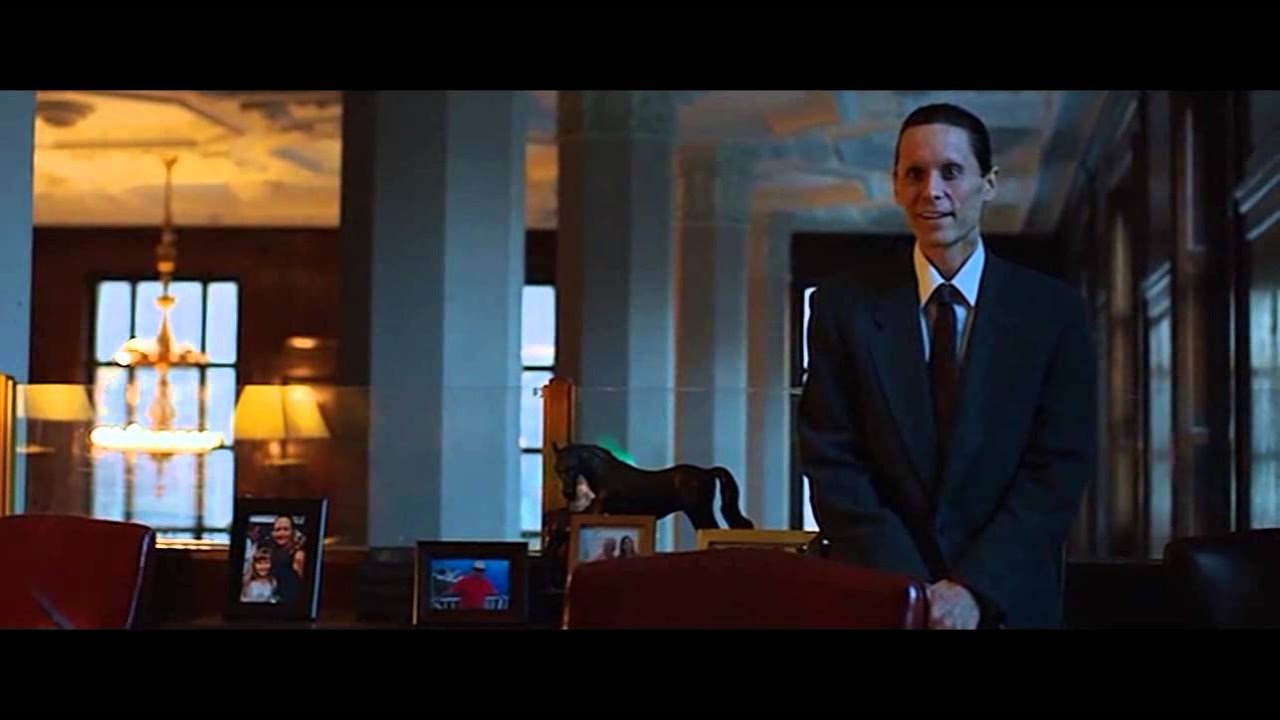
Inside the office, the next shot starts with an extreme close-up of Rayon’s hand picking up a family photo from a table near a window, where similar photos are arranged. The camera pans left until Rayon, or Raymond in this scene, settles into the right one-third of the frame. This is the first time the audience gets to see ‘Raymond’ and the camera is placed at a low-angle similar to the Point of View of someone sitting at a desk. The medium shot of Rayon reveals a person who is incredibly out of her element. Her constant fidgeting and guarded facial expression reveal she is highly uncomfortable and doesn’t quite trust the person she’s talking to. Rayon’s attire, an ill-fitting black suit that obviously doesn’t belong to her, further accentuates the fact that she doesn’t belong to her father’s world. This is not the Rayon we know. Compared to the woman who regularly wears electric-blue eyeshadow and a faux fur coat, this Rayon seems drab and lifeless. The lighting in this shot helps our argument. The key light is the sunlight or white light coming in from the window to the right of the frame. It perfectly illuminates half her face, giving her an almost ghostly complexion. The fill light comes from the left background, from a large chandelier hanging behind her. The strange positioning of the fill light casts a golden shadow on the left side of her face. This partition seems to signify Rayon’s duality - on one side, she is colourful, charming and kind-hearted, and on the other, she is a husk of a person, repressed and ignored.
The back light in this shot comes from the window directly behind her but is not as strongly lit as the background light itself. Next to Rayon, multiple family photos are seen, but none of them even hint at her existence.
Shot 3
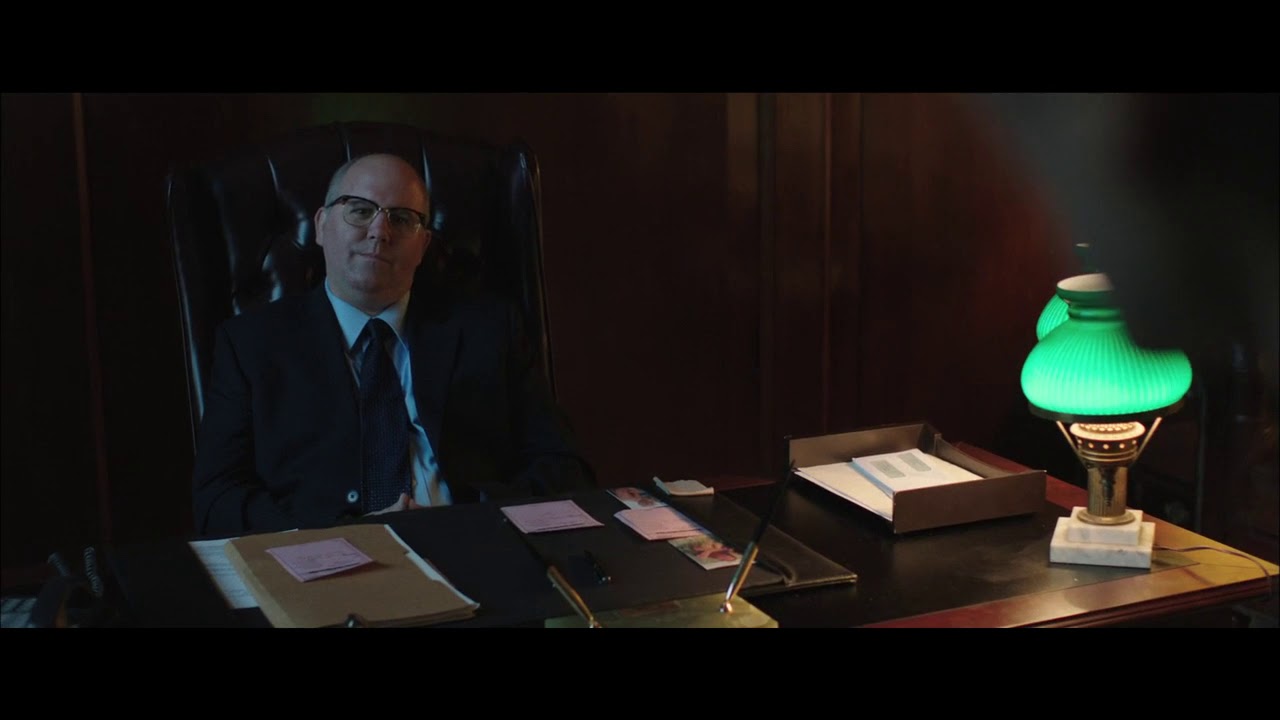
In the next shot, Rayon’s father occupies the left half of the frame. It is an over-the-shoulder shot, with an out-of-focus chin bobbing at the top right corner of the screen. At first glance, Rayon’s father does not strike a very imposing figure; he is balding, quite chubby and can’t even keep his tie straight. Instead, he seems to symbolize the conservative majority in the USA at the time - condescending, slow to accept change and a ‘family man’. The furniture and props on and around his desk don’t reveal much about his personality. The desk just has papers, folders and pens, with a few more family pictures. Behind him, the wood panelled walls have no concept of depth and look like they’re engulfing the small man lounging in his leather arm chair, blissfully ignorant about the troubles of the world. The absence of back light makes it seem like he is two-dimensional, a striking similarity to the flatness of his character itself.
The only surprising item he owns is a bright green lamp, a jarring contrast to the colour scheme maintained in the sequence uptil now. The lamp(s) sticks out like a sore thumb, and in a lot of ways resembles Rayon in his own family.
Shot 4
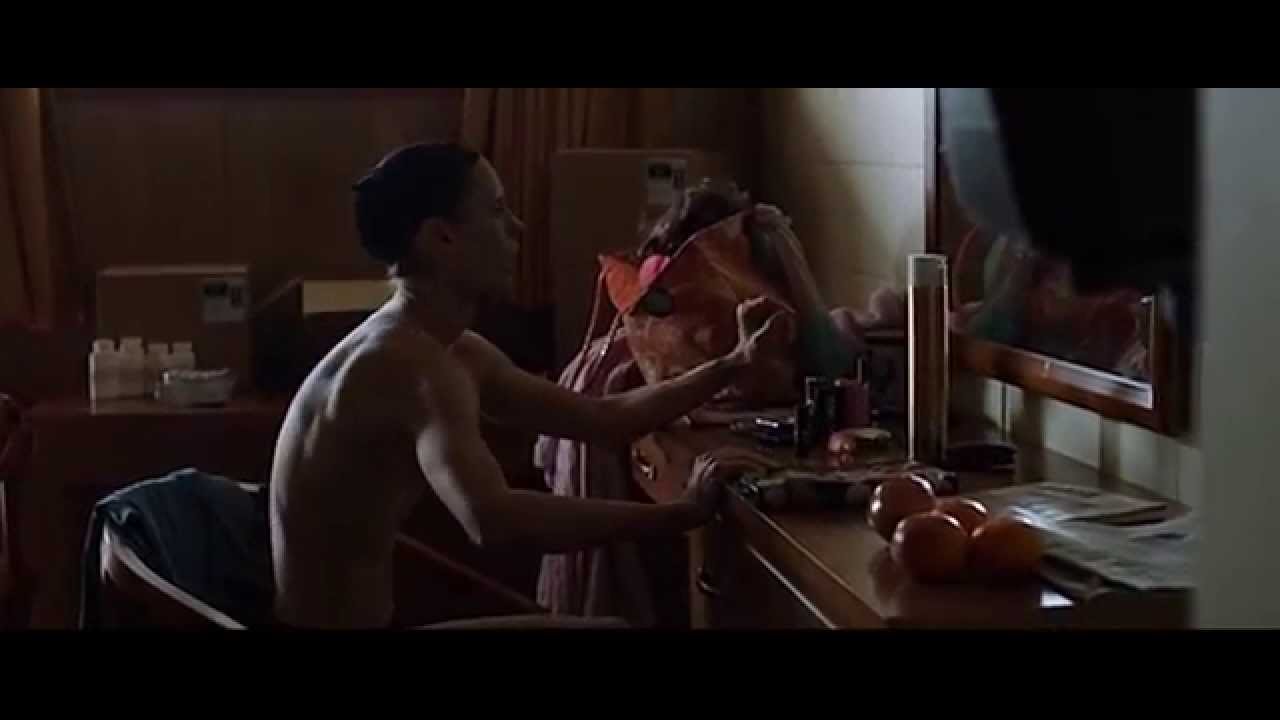
After Rayon returns home, she strips herself of her masculine clothes and starts reapplying her makeup. When the scene starts, the camera pans to capture what seems like a silhouette of Rayon against the harsh background light. Framed almost at the centre, the medium close up of her bare back slowly moving away from the camera portrays a sense of isolation and intense vulnerability. The quiet diegetic ambient sound only magnifies this sense. The shallow depth of field pulls the focus to Rayon and her current mental state.
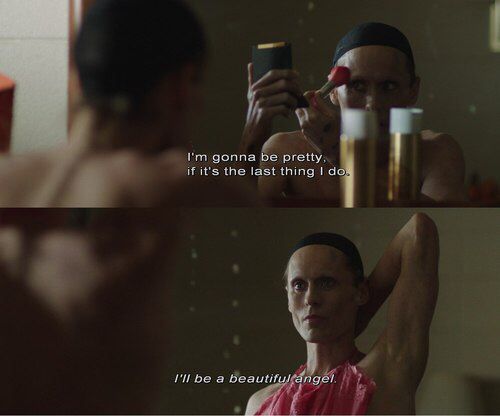
As Rayon applies her makeup to ‘look pretty’, the framing of the shot and low camera angle seek to give the audience a closer look at her own sense of self, to be an unseen observer as she talks to herself in one of her most vulnerable moments. The subjective shot which captures both Rayon and her mirror image uses a prop like a mirror as a tool to imply that the moment we are witnessing is extremely private. The monologue from this scene also foreshadows Rayon’s death two scenes later. Techniques of discontinuity editing have been used here to convey Rayon’s distress in a short amount of time, through a montage-esque series of shots of her making herself feel like her old glamourous self again.
A noticeable trait in the shooting style of the scenes in question, and the movie as a whole is the use of a handheld camera for most, if not all the shots. There is a slight jitter or shake in almost all the shots, which lends the movie the feel of a documentary. Moreover, the reduced number of cameras meant there were very few cuts and takes were longer. This ensured that a cut wouldn’t distract the audience from the intense acting. Even though Dallas Buyers Club was not a documentary in content or structure, this approach helped it have that subtle quality of capturing reality.
Comments