Languages, Dialects and Social Behaviour
“A language is a dialect with an army and a navy.” ― Max Weinreich
A language is generally understood as a collection of dialects and linguistic varieties. All languages exhibit some form of internal variation, and exist in a number of different varieties. However, when we normally talk about a language, we refer to the variety that is standardized and accepted by society as the ‘proper’ language. Here, the line separating a dialect from a language has always been a bit blurred. A common belief is that a dialect is a ‘local, non-prestigious and powerless variety of a real language’. It is often thought of as a substandard language that is excluded from polite society, and connotes various degrees of inferiority (that is passed on to the speakers of a dialect too).
Linguistically speaking, there is no difference between the accepted variety of a language and its dialects. They are both regular and have rule-governed systems. No single linguistic system can be shown to be inherently better, so the usage of a dialect provides neither an advantage nor a disadvantage. The decision to call a particular variety ‘a language’ depends on the amount of power held by the speakers of that variety over other dialects. A language is afforded more prestige than a dialect, and is set as the ideal to strive towards. Thus, a hierarchy is formed that places the speakers of the standard language above dialect speakers.
Criteria for a Language
A set of criteria can be used to examine if the empowered variety of a language could be more developed than its dialects, and the sociolinguistic attributes that influence social attitudes to either.
- Standardization is the sociopolitical process of codifying a language by developing grammars, spelling books, dictionaries etc. leading to the acceptance of a formal set of norms defining “correct usage”. It is a sociopolitical process that involves picking one language variety and deeming it to be socially preferable. Ex: In Kerala, written media in the form of magazines and newspapers originated in the Kottayam district. Till date, the Central Travancore dialect spoken there is regarded as the standard Malayalam.
- Vitality refers to the existence of a living community of speakers for that language.
- Historicity is the sense of identity that a particular group of people finds through using a particular language.
- Autonomy is the feeling that your language is different from another, and the refusal to be regarded as a dialect of a ‘larger’ language. Ex: the Hindi-Urdu disparity.
- Reduction happens when a particular variety is regarded as a sub-variety due to the lack of opportunities afforded to its users, or restrictions in its use. Ex: Nagamese Creole (pidgin Assamese) is structurally reduced and cannot represent gender.
- Mixture refers to the feelings the speakers have about the ‘purity’ of the variety they speak.
- De Facto Norms refers to the feeling that there are ‘good’ and ‘bad’ speakers of a language and the good speakers represent the norms of proper usage.
A Political Difference
We can say two varieties are different from each other because of the disparities in vocabulary, grammatical rules and pronunciation of words. But at what point do they stop being dialects of the same language and turn into two different languages? This question isn’t as straightforward as defining a dialect as the set of mutually intelligible varieties of a language. The decision for something to be called a language or dialect is tied up with how countries identify their boundaries, how many people speak the language and other political considerations. For instance, Hindi and Urdu are essentially the same language, but are considered separate and even have different scripts. Their differences were magnified for political and religious reasons, and are now symbolic of the differences between India and Pakistan. Conversely, in China, Cantonese and Mandarin speakers cannot understand each other, and yet they will insist that they are speaking different dialects of Chinese, and not different languages. For them, a shared writing system and a strong tradition of political, social, and cultural unity form essential parts of their definition of language.
Even within India, the Hindi dialects spoken in the northern Hindi-Urdu Belt form a dialect continuum. Speakers of dialects that are geographically close to each other can understand each other, but it is improbable that a speaker of Marwari (Rajasthan) would understand someone talking in a Bhojpuri (Bihar) dialect due to all the differences accumulated in their varieties. On the other hand, people living in the border district of Palakkad use a dialect of Malayalam with distinct Tamil intonations, and can understand their Tamil-speaking counterparts in Coimbatore.
Social Aspects
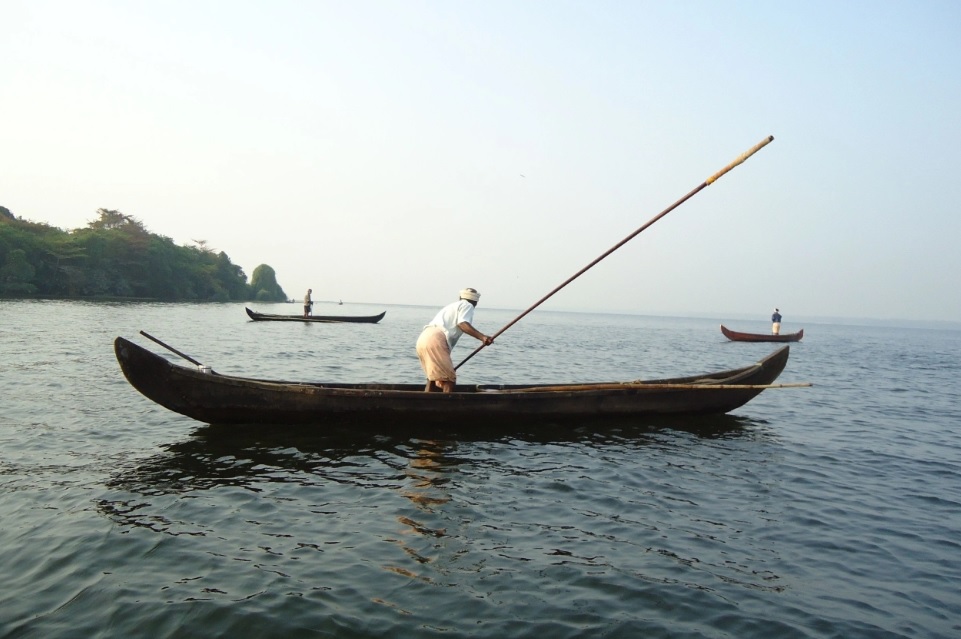
Apart from regions, dialects can also be an indicator of what social class you belong to. These are called sociolects. A sociolect can indicate your age, caste, occupation, education, racial or ethnic origin and can be categorized as socially prestigious or socially stigmatized. In a caste-based system like India, less educated people try to emulate the upper-caste sociolect by avoiding some sounds from their pronounciation (eg: the /r/ sound). In Kerala, the Kadappuram dialect used by fisherfolk is looked down upon while in Mumbai, there is a stigma associated with people who use Tapori Hindi as it is assumed that uneducated, lower-income groups speak this way.
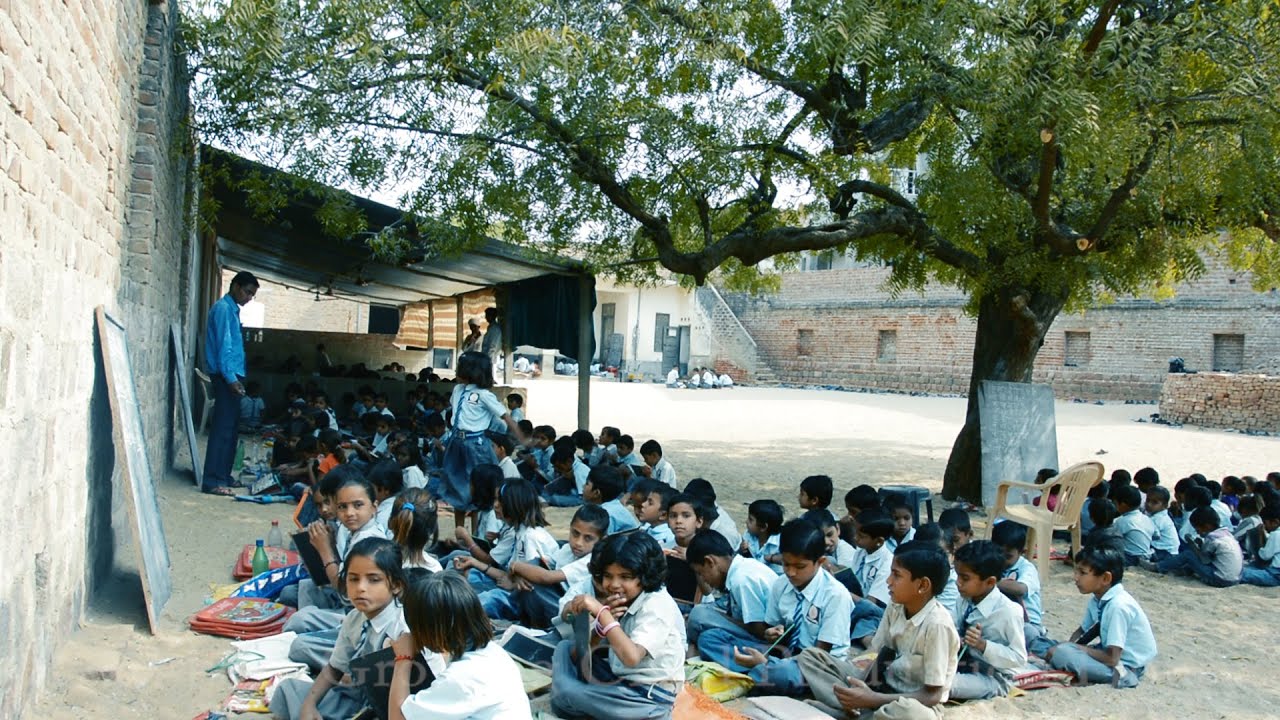
This inherent bias seeps into the education sector too. Children are often educated in the ‘prestige language’, be it liturgical (Sanskrit) or secular (English), or in the language of wider communication in the area, even if it is different from one’s home language. The regional dialects of a child are often ignored and actively discouraged. This can have far-reaching consequences. Learning is claimed to be better and more successful when conducted in the variety spoken by students as it enhances their social, cognitive, emotional and linguistic development. A classroom may have children from varying backgrounds and to them, their dialect is a part of their heritage and group identity as well as an instrument for the expression of culture.
In a multilingual and multidialectal society like India, a standard variety is used to equalize society. But many dialects and marginalized local languages face extinction due to this rampant standardization. Nihali is a language isolate spoken in Jalgaon Jahod in Maharashtra by around 2500 people. However, no tribal language is taught in the schools of Maharashtra. Even if a child speaks Nihali at home, once he enters a classroom, he instantly switches to Marathi. The continued disregard for the indigenous language or dialect might result in its vanishment. The use of the non-standard dialects in education helps the elevation of the status of the dialects in a society, erases the stigma associated with them and prevents their possible extinction.
References:
- Language, Dialect and Varieties (from An Introduction to Sociolinguistics), Ronald Wardhaugh
- Sociolinguistics: Goals, Approaches and Problems,Roger Bell (1976)
- Languages of India: Pidginization/Creolization, Oceanic Linguistics Special Publications (1975).
- Convergence and Creolization: A Case from the Indo-Aryan/Dravidian border in India, John J. Gumperz and Robert Wilson (1971)
- Dialects in Schools and Communities, Carolyn Temple Adger, Donna Christian, and Walt Wolfram (1999)
- The Use of Dialects in Education and Its Impacts on Students’ Learning and Achievements, Wondimu Tegegne
Comments