Reservoir Dogs: The Storytelling Motif
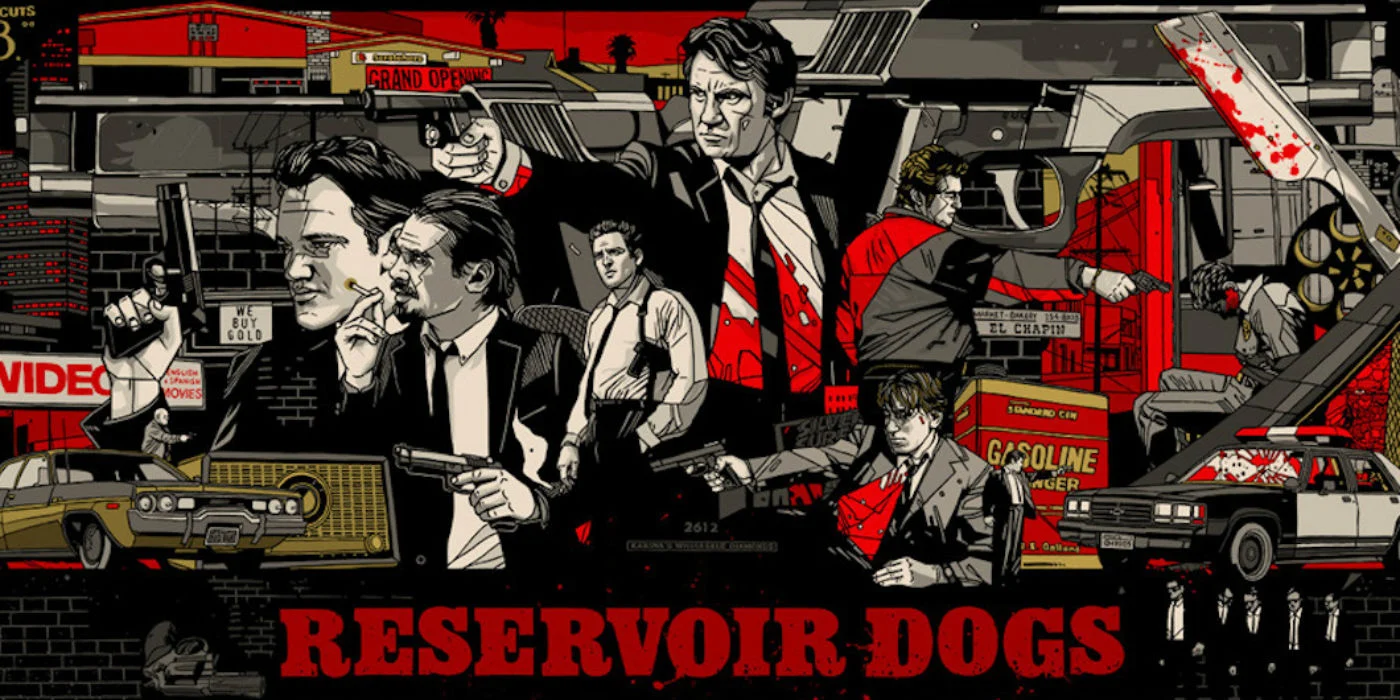
Movie: Reservoir Dogs (Quentin Tarantino, 1992)
Sequence: The Commode Story (1:06:42 to 1:14:06)
This blog post tries to understand the purpose of this sequence in the movie, and more importantly, the narrative devices used to effectualize the sequence. It also discusses the scene progression and shot composition choices made by Tarantino.
This sequence begins with Mr. Orange (or Freddy) reading out and eventually narrating ‘The Commode Story’. The story is a made-up anecdote presented to Joe Cabot, Nice Guy Eddie and Mr. White by Freddy about a drug deal gone awry. The story is set during the Los Angeles marijuana drought in 1986. At that time, Freddy had struck up another deal which required him to tag along for a sale at a train station. While he waited for the buyer, Freddy went to the men’s room, carrying the weed with him in a carry-on bag. As luck would have it, there were already four Los Angeles county sheriffs chatting inside, along with a German Shepherd. According to Freddy, they could ‘smell it, just like that fucking dog’ could. A panicking but quick-thinking Freddy simply played it cool and went about his business, and walked right out again.
The elaborate anecdote is meant to serve as a tool to help the criminals feel like they are getting to know Freddy better; the themes of drug dealing and implicit contempt for the police would also help him gain their acceptance as one of their own. Just as the Cabots felt familiar to Freddy after hearing his story, through a monologue or a few minutes of dialogue between characters, the film audience understands certain intricate characteristics of the criminals - Pink’s stance against tipping and Blonde’s loyalty to Joe Cabot among others. From a film maker’s point of view, the narration of the Commode Story is a tool to condense an eight minute monologue into an acted out sequence that holds the audience’s attention from start to finish. Through progressing from stationary shots of Freddy simply reading out the script to a shot of him fervently reciting the story within the bathroom sequence shows us the passage of time during which he practiced his script and finally presented it to the Cabots and Larry.
Narration Through Storytelling
The story makes the most obvious use of a motif used throughout the movie - storytelling. When Holdaway initially explains how to learn all four pages of the script, he tells Freddy to memorize what’s important and make the rest his own. He basically tells Freddy it’s about getting into character and saying the story as he perceived it; remembering the details and letting the listener fill in the blanks. All the listeners have access to is the story given to them by the narrator, from a particular point of view, with a particular set of details and context. For us, we are shown snippets of how each character joined the heist and how each of them reacted after the heist. However, just as Freddy left out the part where the deal actually went down, we are not shown the actual heist taking place. Unimportant to the narration of the story yet the plot point around which the story revolves, this portion is filled in by our imagination.
At this point in the story, the premise of the story has been built - a few scenes leading up to the heist have been shown through Blonde’s and White’s chapters, as well as the initial responses to its failure through altercations among Blonde, White and Pink. While the first act dealt with pinning the blame on someone and finding out who the rat is, the moment when Orange shoots Blonde and reveals that he is an undercover cop signals the beginning of Act 2. The Commode Story scene comes soon after this turning point and is vital to provide some context about Orange’s intentions.
Shot 1
The sequence starts with a full shot of Freddy on a rooftop in bright daylight. The mise-en-scene is bare and non-descript, the shot doesn’t reveal much about their surroundings except by the presence of a turret behind him. The camera tilts up to accommodate Holdaway when he enters the left side of the frame, his back to the camera but angled in such a way so that he’s facing the central axis of the camera. The shot is another example of a low angle shot used in the film, along with the previously used trunk shot.
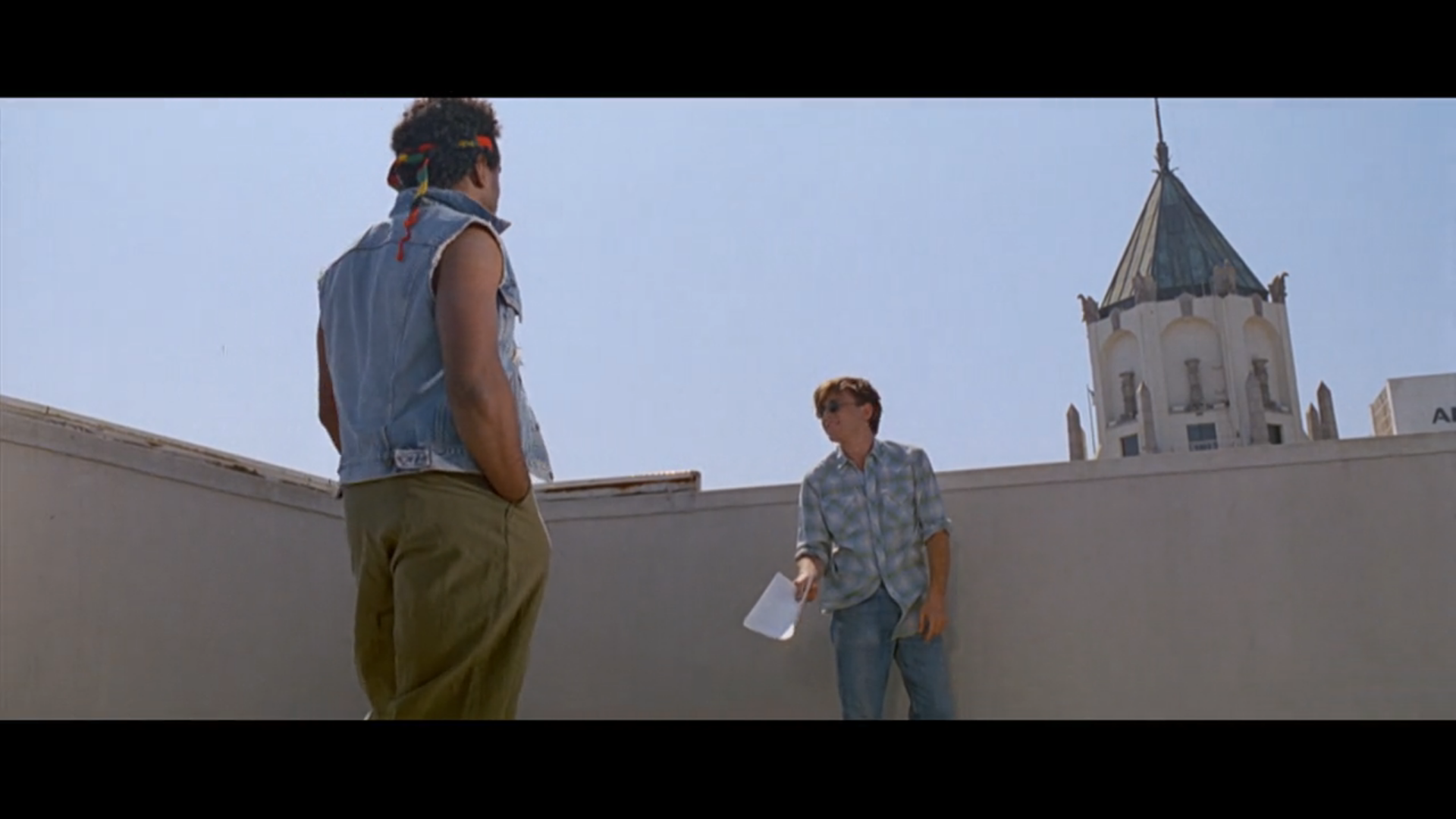
The angle, coupled with the wide expanse of blue sky above their heads and the monochrome buildings accentuate the wide expanse of space that is generally associated with Los Angeles. The angle and shot composition also convey the sense of hope the ‘good guys’ have for their mission, while the colour palette of beige and dusty blue in the scene mellows the tone of the movie for a while. The location also helps Holdaway make good use of the space by theatrically enacting the importance of remembering the details in the scene.
Shot 2 (Montage)
The following montage sequence follows Freddy as he practices the script of the Commode Story. A common camera technique used is the stationary shot as Freddy paces back and forth, in and out of the frame. These medium shots with a cluttered depth of field indicate the passage of time, and transition from casually reciting the script in his bedroom, to emphatically practicing it in front of Holdaway in the graffiti yard, to actually delivering the anecdote before the Cabots and White.
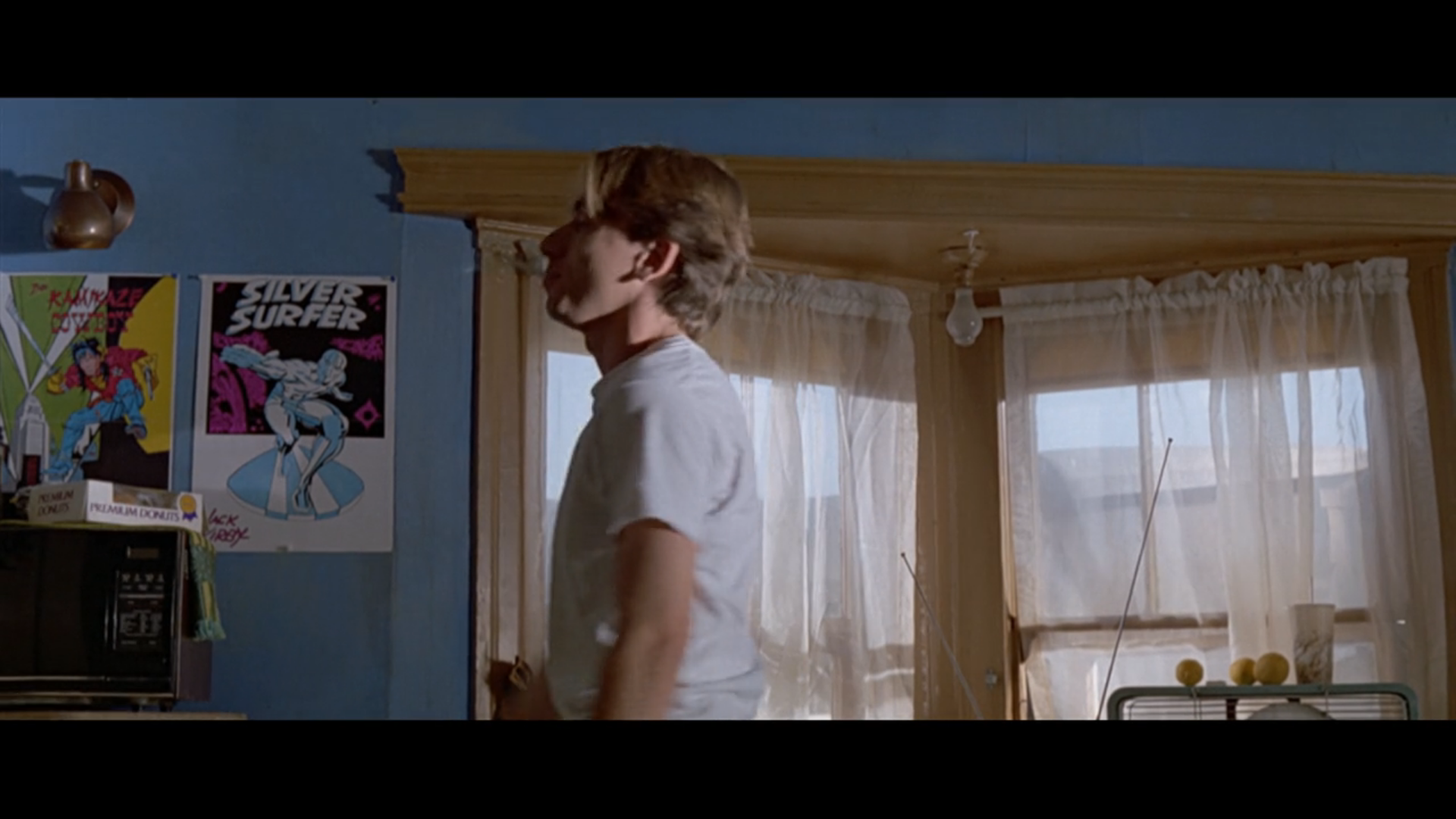
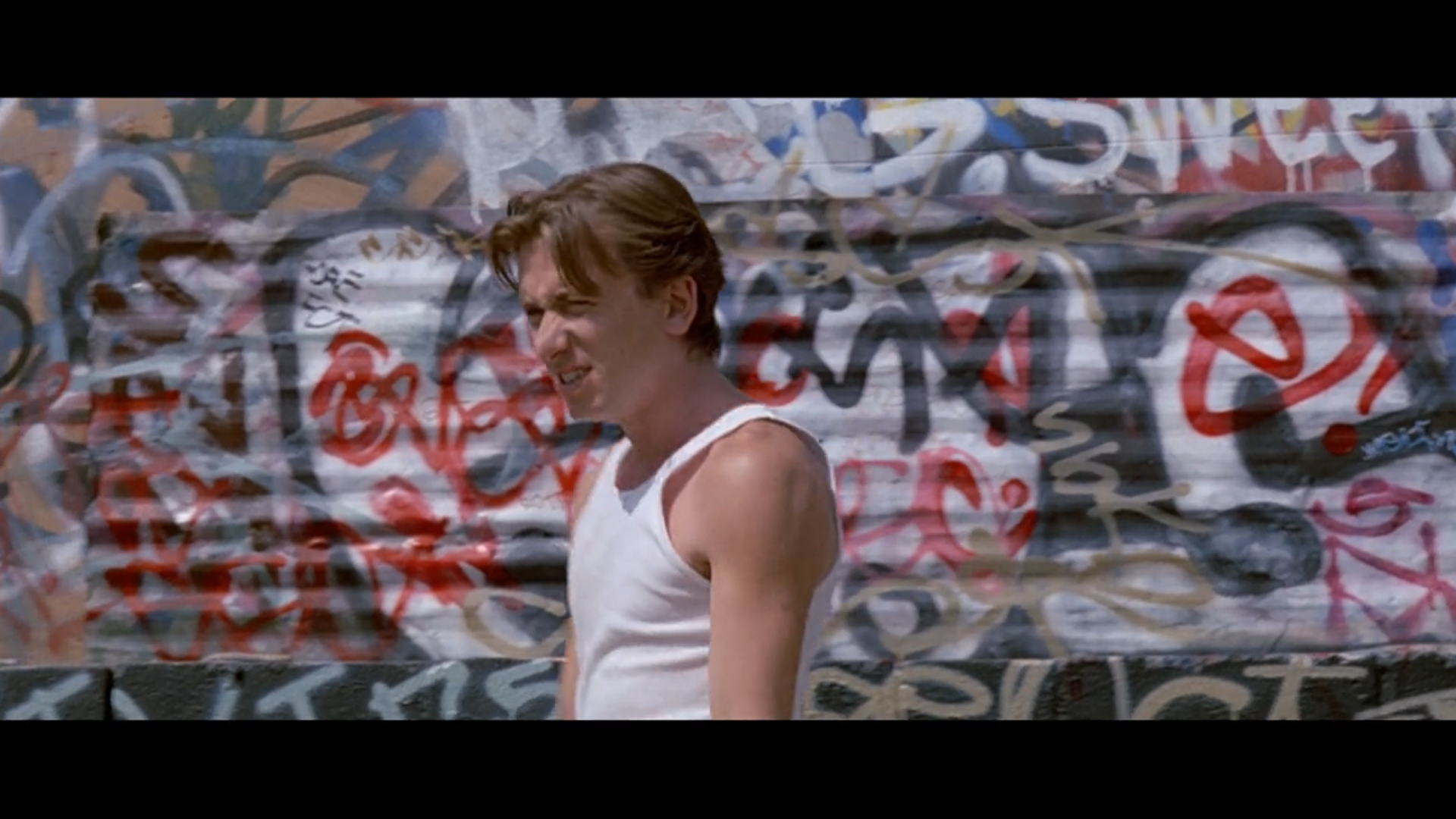
In the graffiti shot, the shot composition framing Freddy in the center delivering his lines to an audience of one gives the impression of a theatrical run-through in front of the director, as the protagonist delivers his main monologue. Freddy’s vocal modulation and facial gestures substantially change from the bedroom to the yard, and he starts narrating the story as if it actually happened to him. This is the most apparent indicator of the progress he has made with respect to making the story ‘his own’.
Shot 3
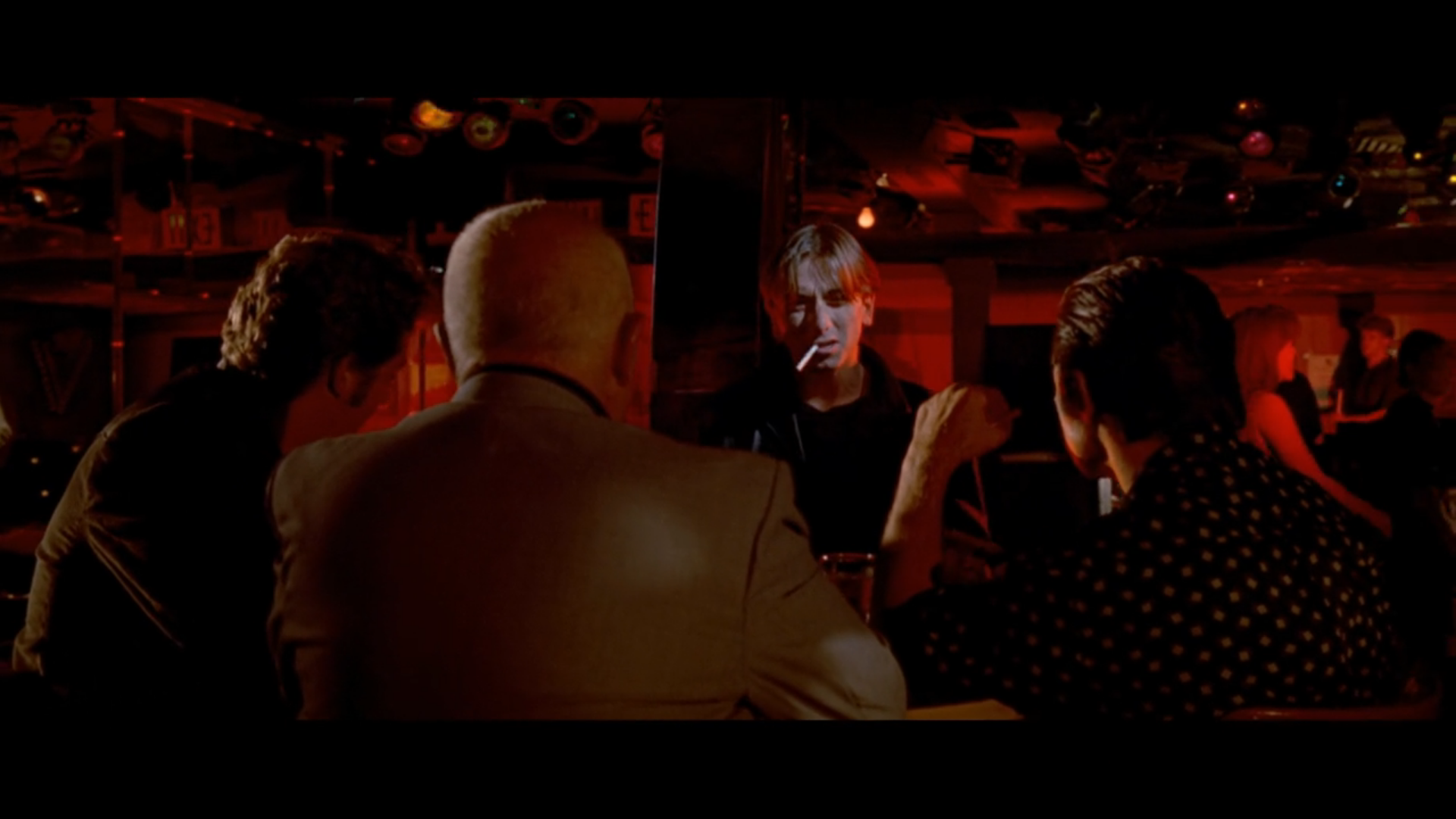
Freddy’s narration continues as the scene shifts to the day of the actual meeting. The mise-en-scene is a nightclub partially filled with people dancing and multicoloured disco lights rotating on the ceiling. Nice Guy Eddie, Joe Cabot and Larry are sitting around a table, while Freddy is standing in front of them, cigarette lightly balanced in his mouth to show his casualness, narrating his story. The entire club is lit by a strong red background light that brings the background in shallow focus and illuminates the characters with a red glow. The location sound of dance music further highlights the fact that they are seated in a club, possibly disreputable, as seasoned criminals frequent it. However, Freddy is initially lit by a strong key light that gives the impression that he is under a spotlight of sorts. The fill light does nothing for the shadows on his face and they keep growing as the camera tracks/revolves around the table in question.
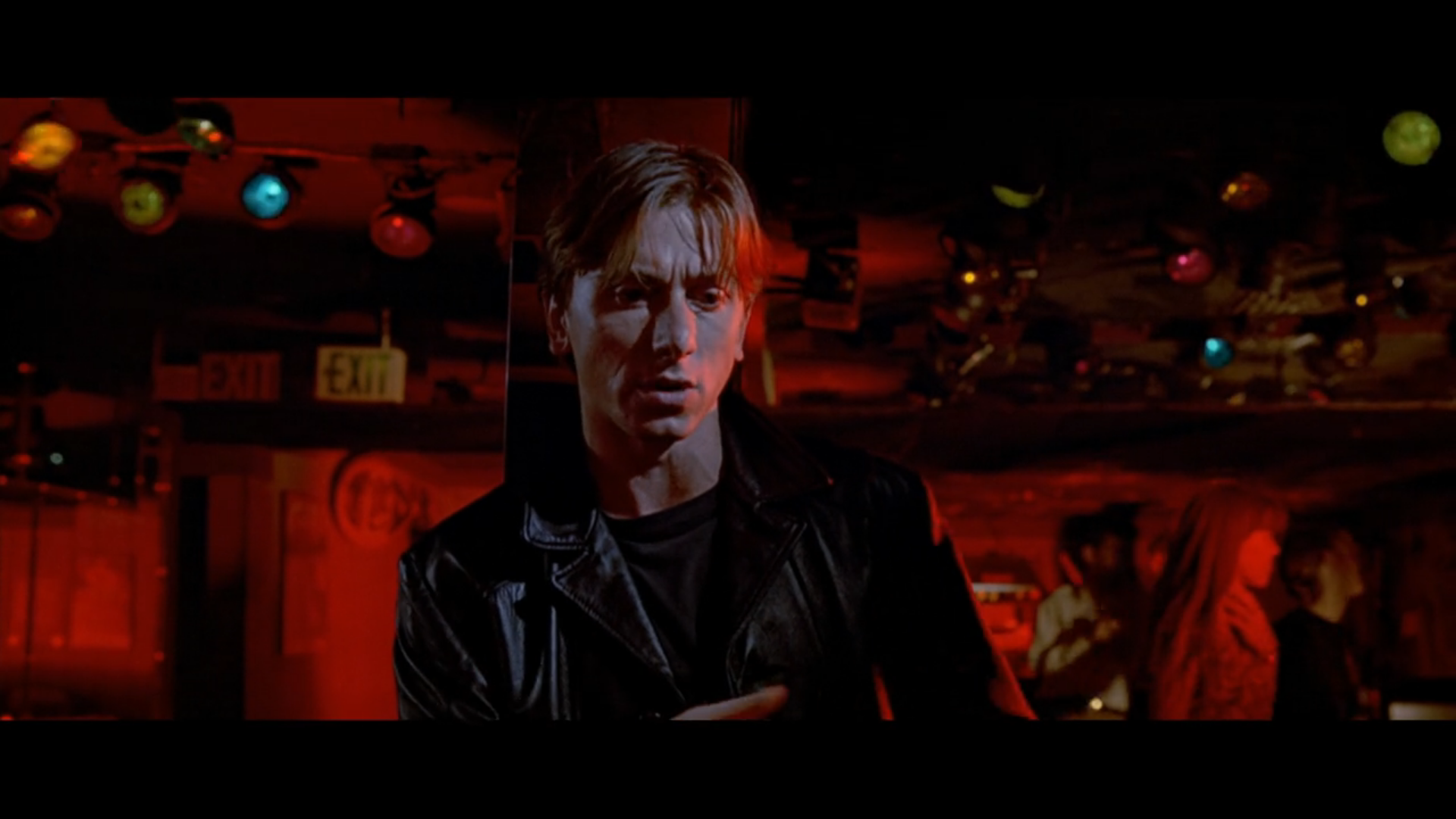
This over-the-shoulder shot frames Freddy in the center in a medium close-up. The tracking shot helps the audience be more involved in the space and conversation taking place, and adds depth to the background.
Shot 4
The scene suddenly transitions to a visual retelling of Freddy’s story. The camera follows him into a bare men’s room, lit by a moderate bright white light. The room is unrealistically bare and empty, it looks exactly like a scene made up in his mind, with only elements that serve the purpose of the story present in the mise-en-scene. The acting and delivery is not made realistic (in the sense that the time spent observing the policemen is exaggerated) so that the narration can catch up to the events taking place. This fact is further highlighted when Freddy in the washroom also starts narrating to the sheriffs. The camera is set at a low angle and tracks around him twice. This movement and composition elevates the tension in the scene to match the narration as he utters phrases like ‘Every nerve ending, all my senses, blood in my veins, everything I have is screaming..’. It gives a sense of being cornered.
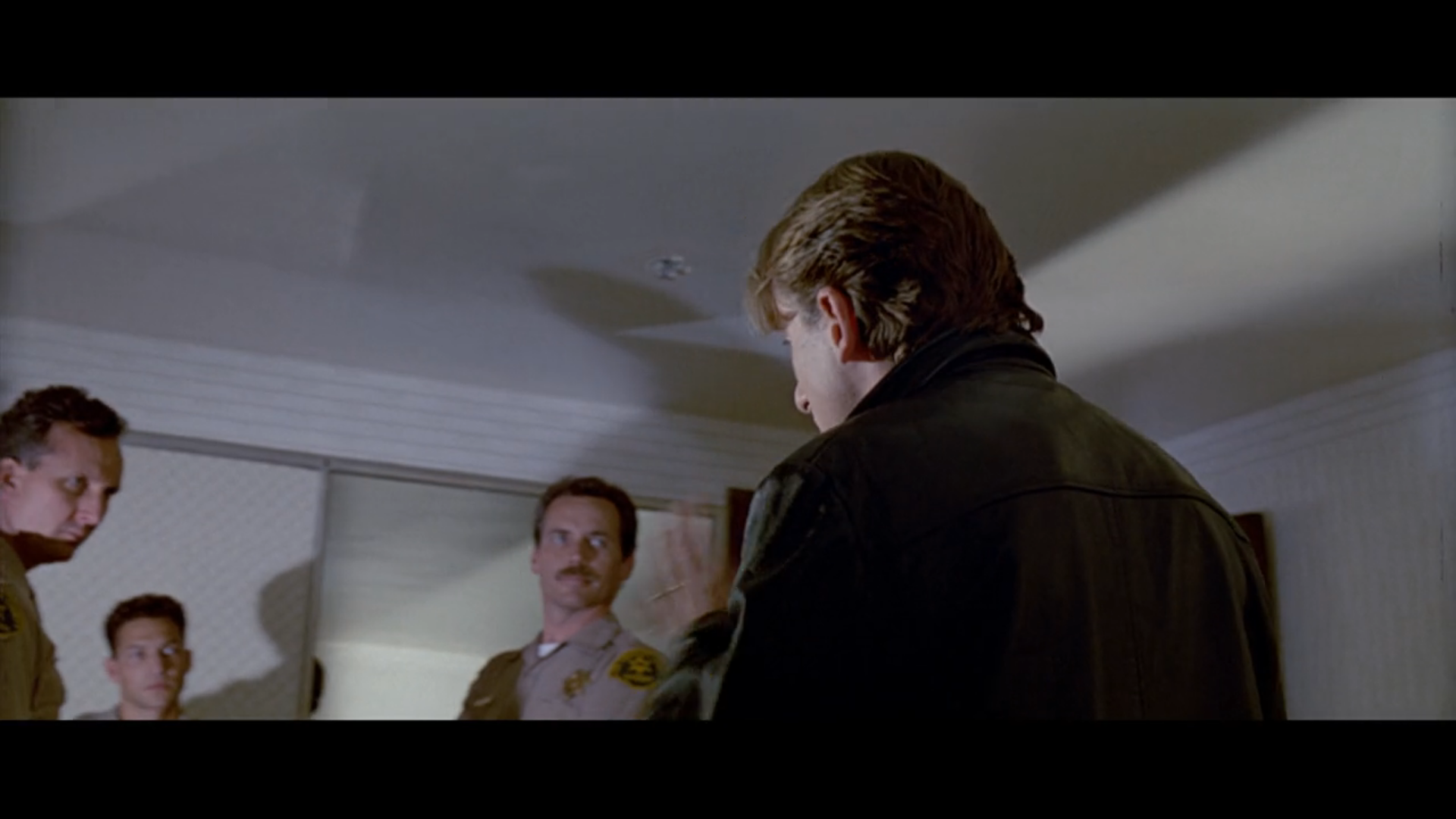
This highly realistic and involved narration makes the audience much more engrossed in the story. Additionally, the camera revolves around him in the same way it did when he was surrounded by the Cabots and White. This brings forward a parallel between how he claimed to have been feeling during the police confrontation to what he was actually feeling as he talked to the criminals. The two situations are very similar; in both he panics but has to make an effort to appear nonchalant to stay safe. The storytelling motif makes another appearance here, as one of the sheriffs recounts a story within Freddy’s story about how he almost killed a civilian.
The entire men’s room scene has no extra diegetic sound other than the narration; the only sounds are that of the sheriffs’ conversation and the dog barking. However, when Freddy switches on the dryer, the loud noise essentially drowns everyone out for a few seconds and the clever use of sound escalates the tension again as it reaches a crescendo. The extreme close up of Freddy slowly drying his hands also serves this purpose. The camera tracks across the faces of the sheriffs in close ups and one almost expects a climax to the slow buildup in this part. However, it dies down and the scene reverts back to the nightclub.
The film’s non-linear storytelling style helps build momentum but also develop characters and highlights certain time instances. Like the rest of the film, the Commode Scene runs on the fuel of language, rather than tangible events. There is close to no background music solely so the audience focuses on the dialogue. Tarantino’s clever use of discontinuity editing in this particular scene with a montage to show the passing of time, and the switching of narrative between real and imaginary scenes adds a unique twist to the chapter.
Comments